
One of Our Own: Marcy's Story of Endo, Loss, and Two Daughters
At Indigo, we believe some of the most powerful things a practitioner can offer aren't found in a protocol. They're found in lived experience. Today, we're sharing something a little different: a conversation with our own Dr. Marcy Julius, acupuncturist and one of the heart-and-soul practitioners at Indigo.
Marcy agreed to tell her whole story, not because it has a tidy ending, but because too many people are sitting in the middle of theirs, alone, wondering if anyone really gets it.
If this sounds like you or someone you love, please share it.
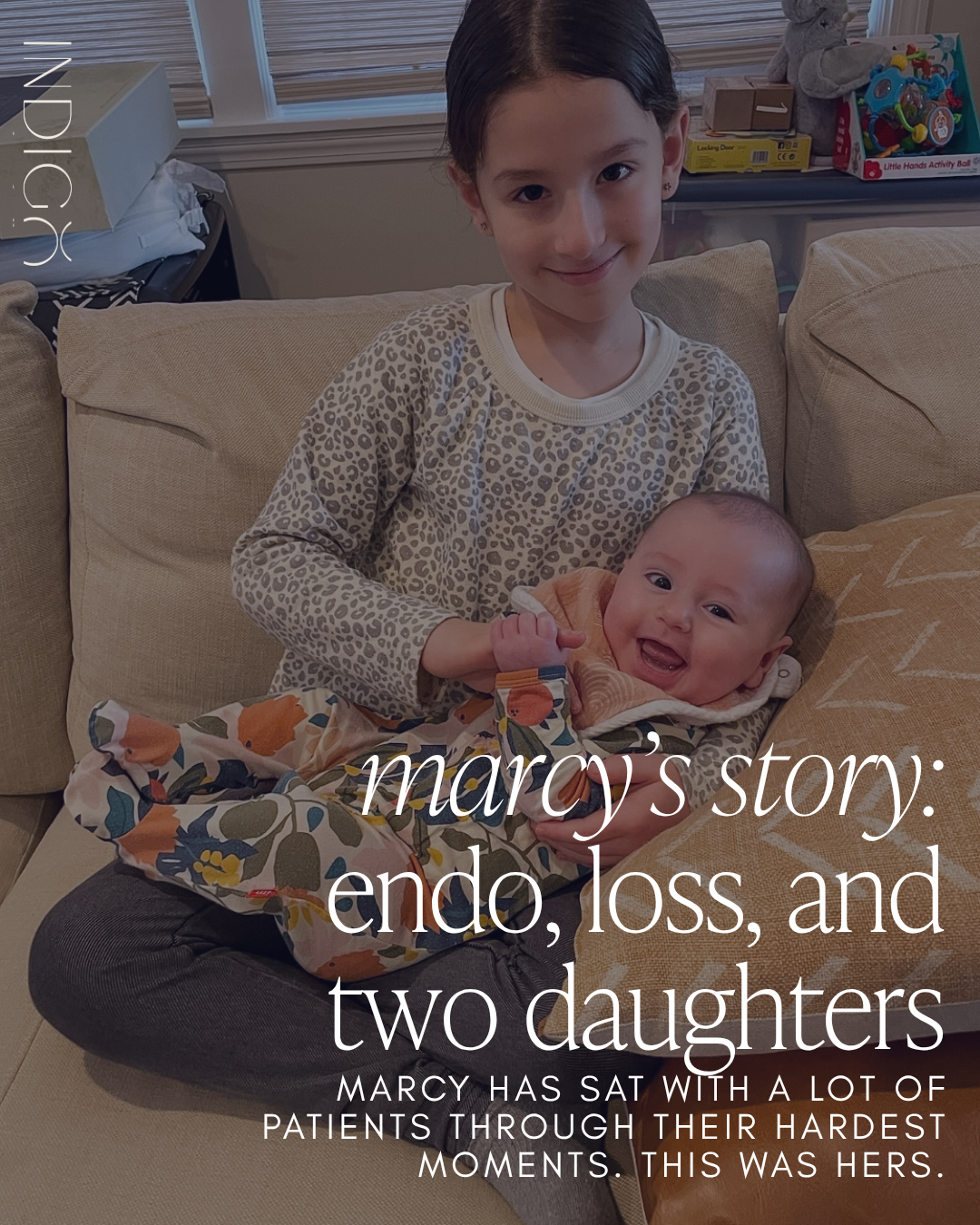
Can you take us back to your endometriosis diagnosis? What were you experiencing, and how long did it take before someone took you seriously?
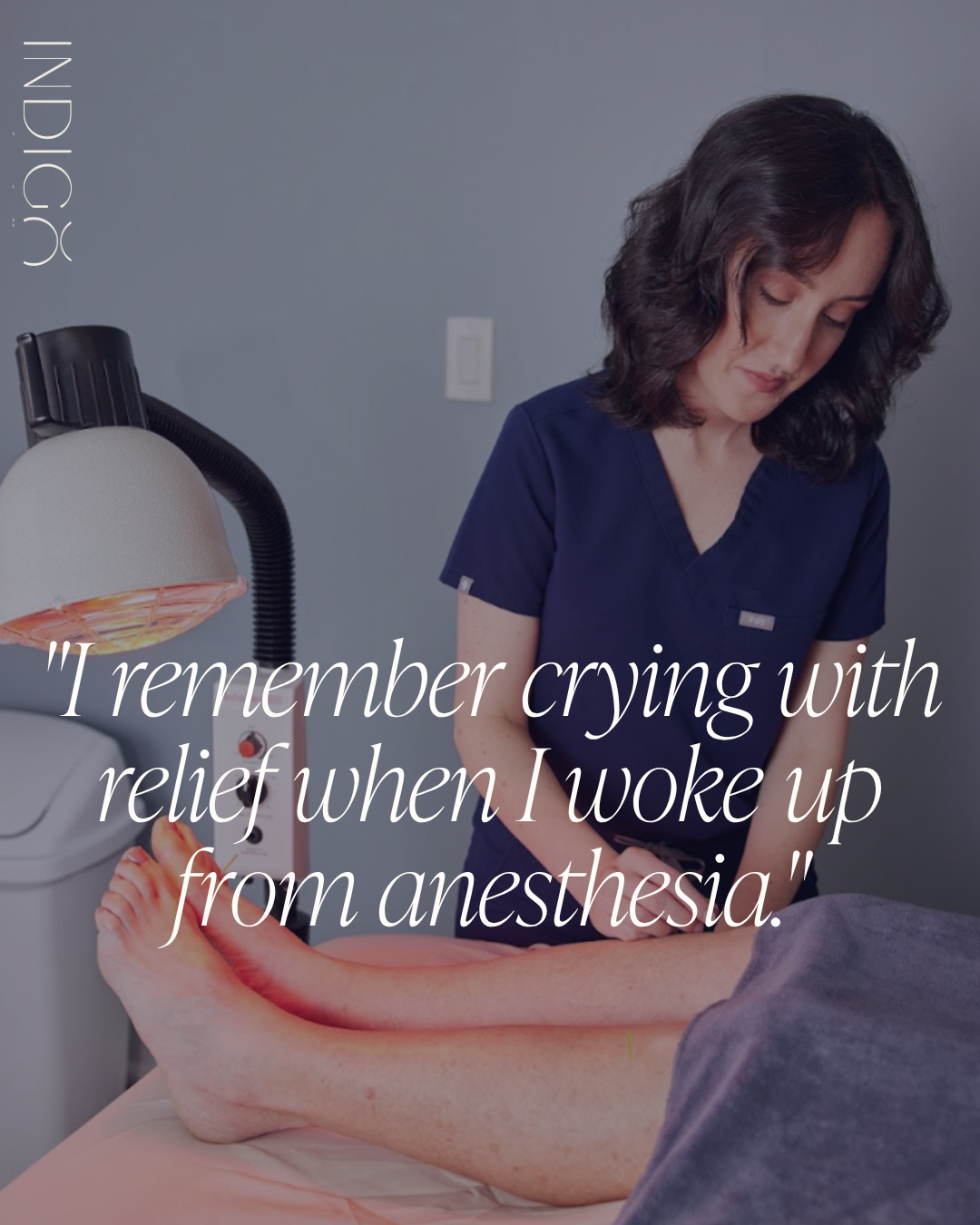
I remember the moment so clearly. It was in a pathophysiology class in acupuncture school, and we were learning about endometriosis. I had been dealing with really bad period pain for as long as I could remember, and no one had ever taken me seriously. This was such an “Aha” moment for me. Over the next few years I had two hospitalizations due to severe abdominal pain with no real answers as to why. Eventually when I was missing work due to the pain, I knew it was time to see a specialist. It’s such a tough disease in that it’s only definitively diagnosed with exploratory laparoscopic surgery. So you start gaslighting yourself and thinking “is it really that bad?” and “what if I go into surgery and they don’t find anything?”. I remember crying with relief when I woke up from anesthesia and they told me endo was scattered all throughout my pelvis, intestines and even on my appendix. I got my period when I was 13, and it wasn’t until I was 30 when I had my diagnosis. So I had 17 years of pain without truly knowing why.
What did your fertility journey actually look like? The timeline, the losses, the uncertainty. What do you wish people understood about that experience?
I can basically break down my fertility journey into two parts: Before Lainey and before Arlie. I’ll have to leave out some of the details or this will be way too long…
Micah and I were still engaged when I had my surgery, so the doctor recommended I go on the pill with the hope of suppressing any more growth, and try to conceive as soon as possible with the help of a reproductive endocrinologist. Right after we got married we went to an RE and started with timed intercourse. I actually got pregnant on the first try and was shocked. When I got the call with the blood test results I even said “I thought this was going to be hard!”. Famous last words… that ended up being a very early miscarriage or what they call a biochemical pregnancy. The next time we tried, I got pregnant again! This time we saw the heartbeat at multiple scans and everything felt super positive. At our 10 week appointment, there was no longer a heartbeat. I had a D&C fairly quickly and the baby tested positive for a chromosomal abnormality that typically leads to miscarriages. After that I stopped getting pregnant so easily. We did some more timed cycles and an IUI. Eventually we did a round of IVF in the hopes of getting some euploid embryos to transfer, but came out with only one that was pretty poor quality. We jumped right into another cycle, but while suppressing with Lupron, I ended up pregnant with our daughter, Lainey. In the end, it only took a little over a year to conceive her, which I am super grateful for.
We started trying to conceive a second baby when Lainey was about a year old. I didn’t want to rush to work with an RE this time because I genuinely thought it would be easier. However after about a year and a half of trying with no luck, we met with a wonderful doctor. This part is a little fuzzy, but I believe we did a few rounds of medicated timed intercourse. When this didn’t work I knew it was time to do something different but I wasn’t ready to do another cycle of IVF. Instead I decided to try three months of hormonal suppression that can help with infertility due to endometriosis. These meds put you into a medical menopause which means brutal hot flashes, irritability and insomnia. The first month after coming off the meds, I got pregnant. That pregnancy ended up being a blighted ovum, with a D&C at about 9 weeks. At that point we decided to do another round of IVF. This was pretty awful, as we ended up with 5 embryos sent out for testing but they all came back abnormal. I was pretty defeated after that and didn’t want to do another cycle right away, so decided instead to do another 3 month suppression, after which I got pregnant again. This led to an ectopic pregnancy and emergency surgery where they had to remove my left fallopian tube. Surely getting pregnant would be even more difficult now.
Shockingly, the next month I got pregnant again. This time it seemed more promising. We saw the heartbeat multiple times, and everything looked great. However at about 9.5 weeks, I started bleeding and miscarried naturally. The month after that, I got pregnant again. But the positive test faded away after about a week and I bled before I could even get to the doctor. At this point I was done. I wanted to focus on my family and my health (both mentally and physically). The pain from the endometriosis had gotten so terrible again, and I knew it was probably time for another surgery (it had been 8 years since my first). After a truly rough recovery and a year of trying different birth controls and an IUD to help with my pain, I was so close to being ready to get a hysterectomy and be done with all of this. But it just felt too final, and we decided to not do any more meds or interventions, but give it another year of trying until I turned 40. I then got pregnant with Arlie. That took about five and half years.
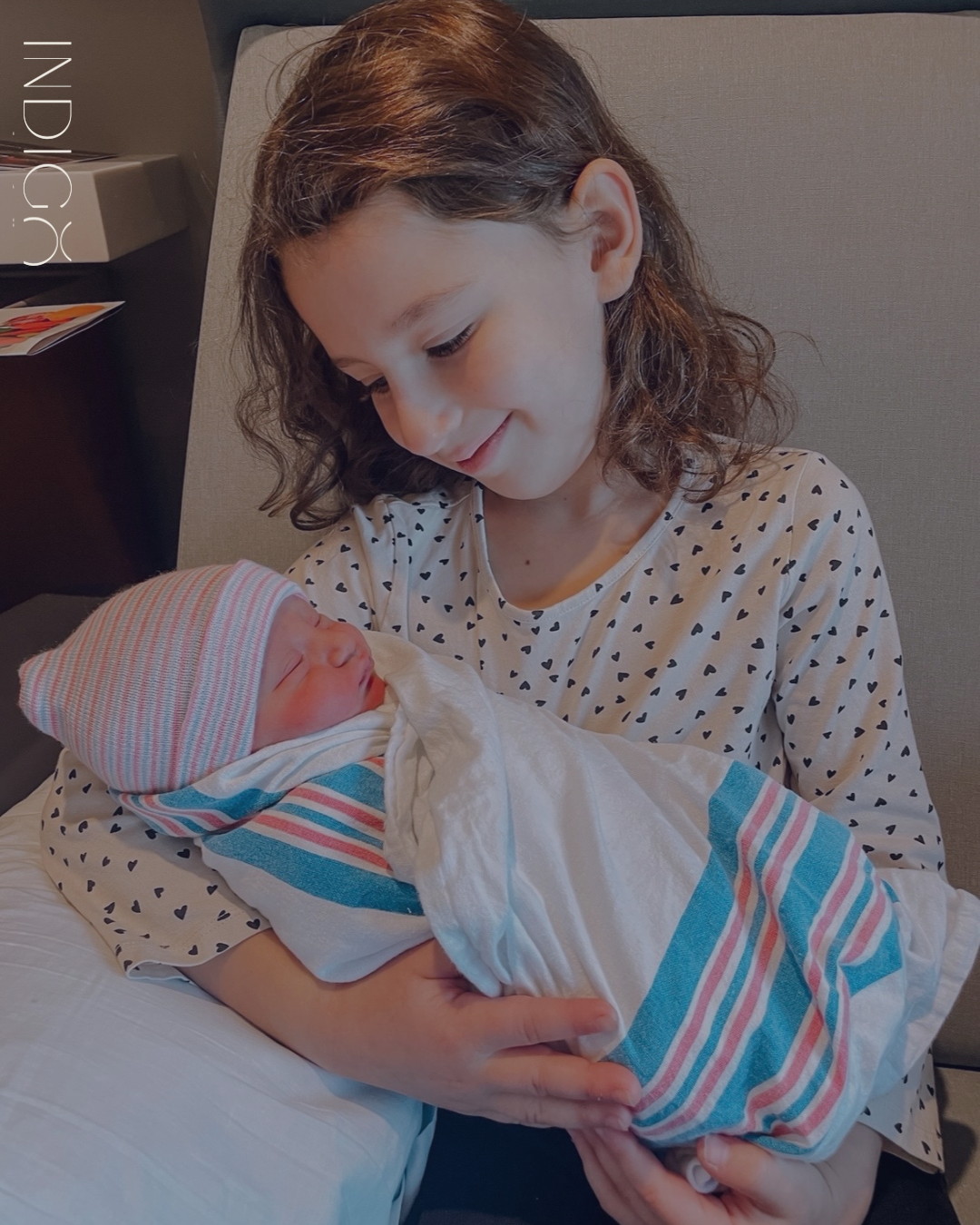
Lainey & Arlie
What did grief look like for you during the miscarriages? Was there space to actually feel it, or were you mostly in survival mode?
So this might sound strange, but the grief from my very first chemical pregnancy was significantly worse than some of my last later losses. There is something about the first time you get pregnant. You don’t even consider the possibility of a loss, so when it happens it’s a major shock. You feel broken, and alone. It’s gut-wrenching and devastating. I know not everybody is the same, but for me the losses I had after Lainey felt very different. Before her, there was the constant fear and “what ifs”. Would I ever have a child? After, they were still awful, but I had my daughter and the pain was softened by having her to come home to. By the last two I would say I became almost numb to it. I can’t even tell you if I cried… I don’t think I did.
What actually helped with symptoms and ultimately with fertility? Anything outside the box that people might not expect or know about?
I think the surgeries to remove the endometriosis were a major factor in terms of fertility. I also think the suppressions played a role in my body’s ability to actually conceive by re-setting my uterine lining and calming the inflammation. I was of course doing acupuncture on and off over the years, by either having one of my colleagues treat me or just treating myself at home. That’s always helped manage my symptoms. I also love castor oil packs and abdominal massages. Anything to give that area some extra love and care.
What's something about endometriosis, or navigating fertility with endo, that you think is genuinely misunderstood even in wellness spaces?
Endometriosis is SO common, it affects about 1 in 10 women. In the infertility world it’s even more so, and it’s said that up to 50% of women struggling to conceive actually have endo. But even then, so many of them will be shut down when they mention it as a possibility, being told they don’t have it without any proof. It’s beyond frustrating, but I can only imagine it’s because there isn’t a simple way of testing for it. There are some less invasive options that dig a little deeper without surgery. There is an endometrial biopsy that tests the uterine lining for a specific marker highly associated with endometriosis. If that test is positive, a 2 or 3-month hormonal suppression with Lupron or a similar medication is often very effective. There are also some very new completely non-invasive tests on the horizon that I’m excited to learn more about. However at the moment, laparoscopic surgery with excision and biopsy of the tissue remains the only definitive way to diagnose it.
If you could go back and give yourself one piece of advice during the hardest stretch, not about treatments but about how to be in your body and your life, what would it be?
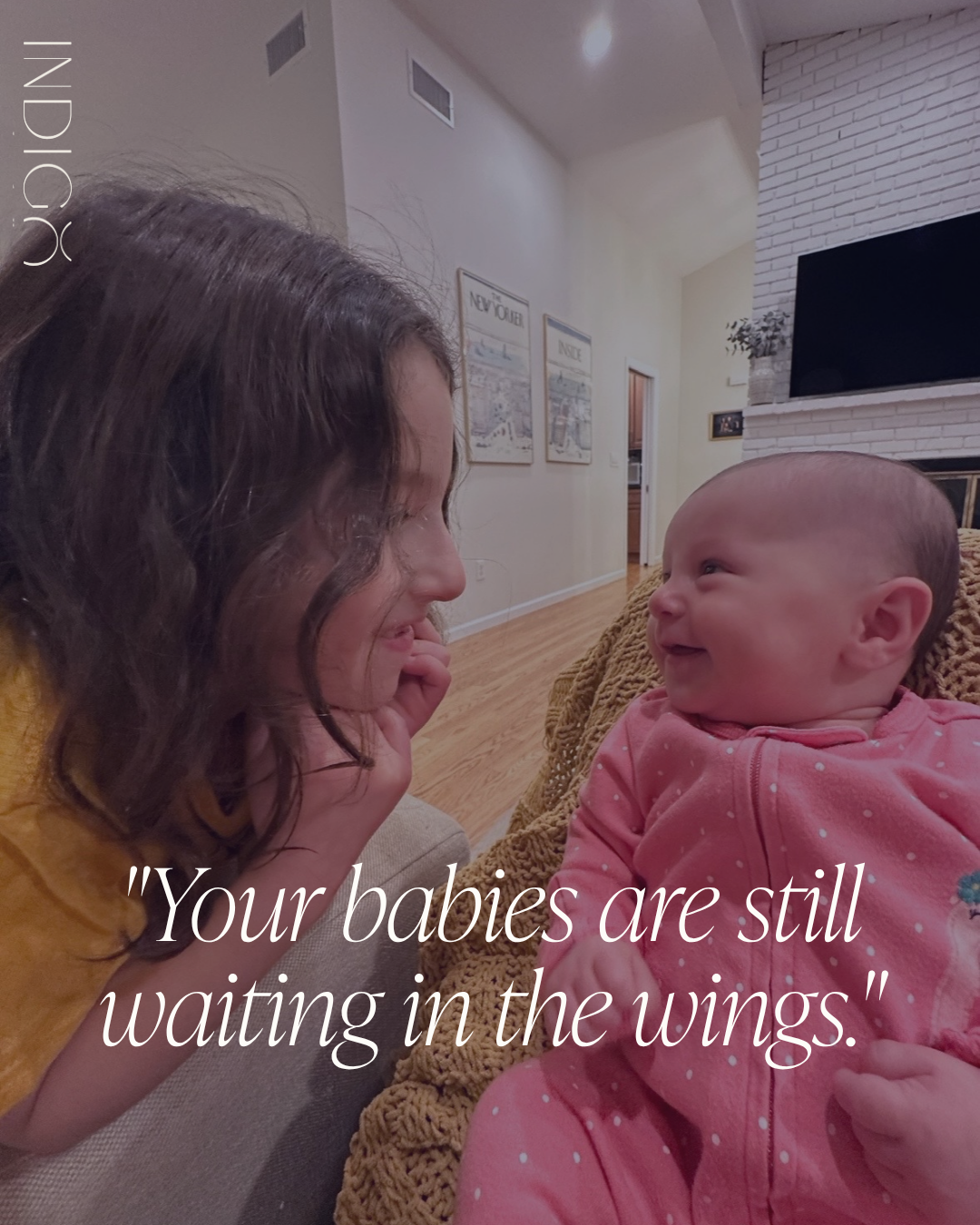
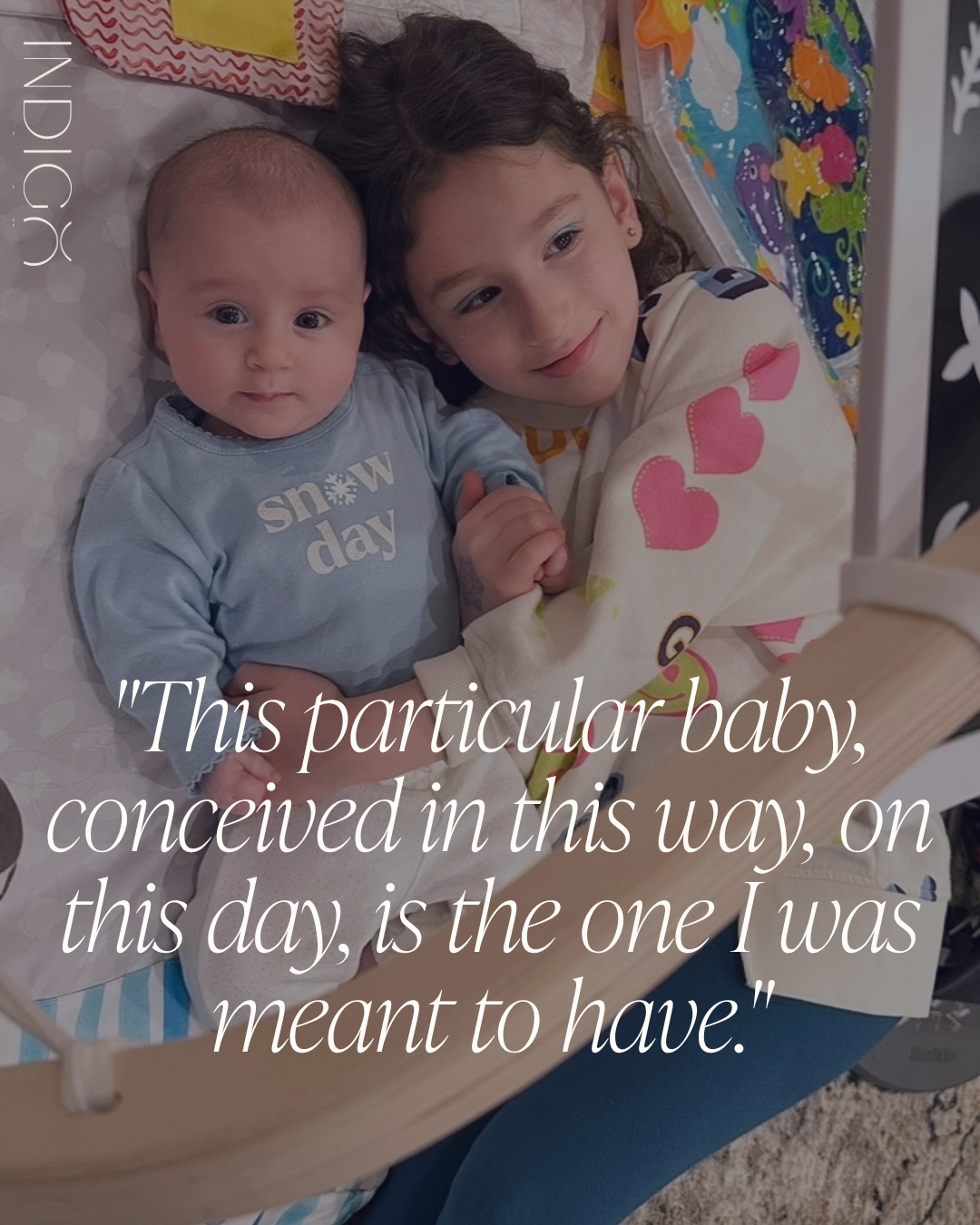
I don’t want to say there was a reason I had to go through all of that, because it was awful, and I still don’t know the “why” of it all. But in terms of children, I do believe in “meant to be”. This particular baby, conceived in this way, on this day, is the one I was meant to have. That’s the advice I would give myself. Your babies are still waiting in the wings.
Now that you're on the other side with two girls and the full picture, how do you hold the grief of the losses alongside the gratitude? Does it get easier or just more complex?
I expected to have children with a much smaller age gap. So when I see siblings playing together I do get a pang of grief and sadness that my girls won’t have that. But the gratitude honestly is the stronger emotion right now. I am loving this 7-year age gap. When Lainey reads Arlie a book, or gives her a bottle, or I can take a shower and put her in charge for a few minutes… it’s amazing.
Thank you, Marcy, for trusting us with your story. If you're navigating endo or pregnancy loss and want support, we're here. Book a session with Marcy in Stamford or Westport, or meet with us for a discovery call.