
Your Built-in GLP-1, No Prescription Needed
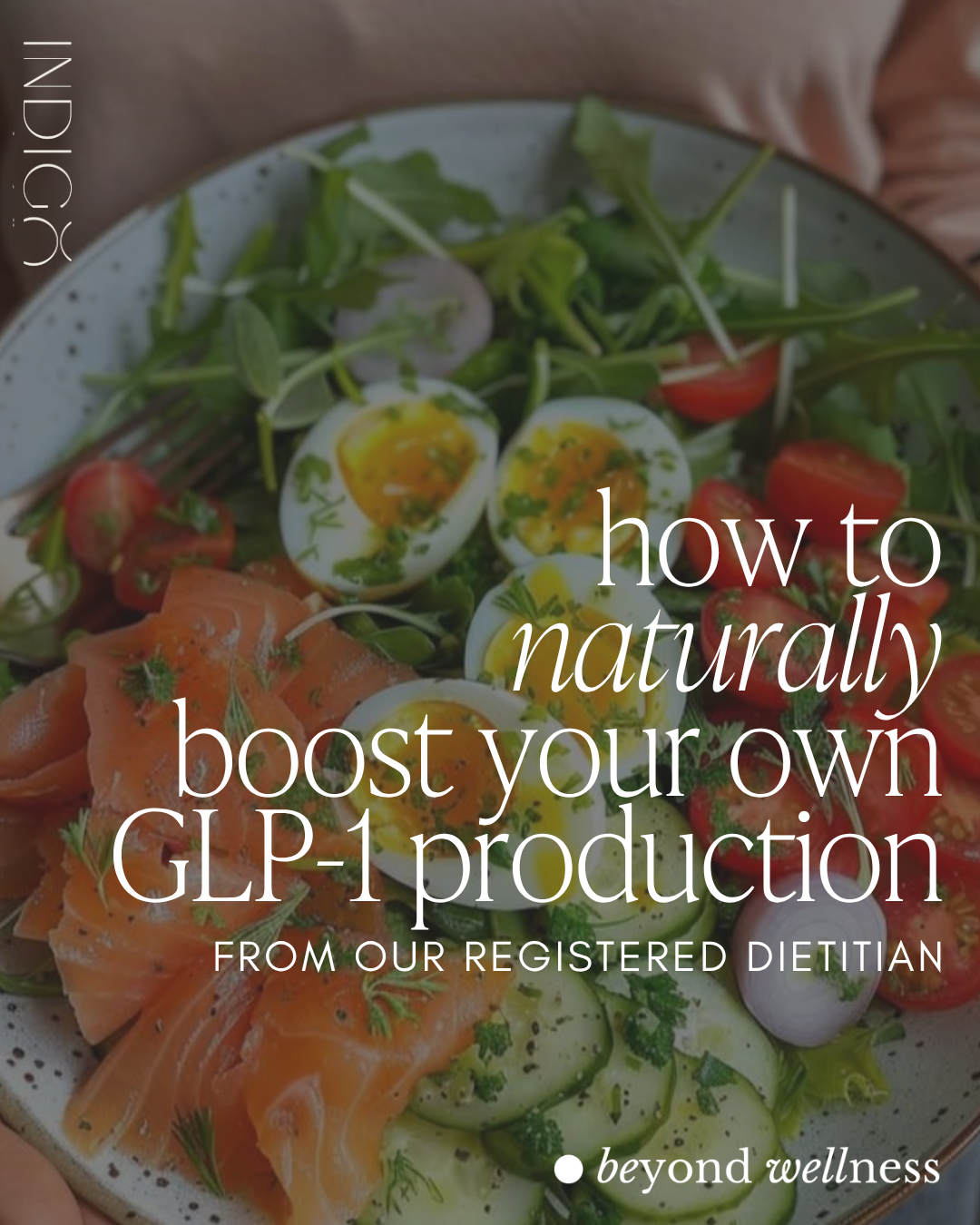
Last week, our registered dietitian and co-founder Carolyn Brown gave a talk called "10 Wellness Tips You Haven't Already Heard". Out of everything she covered, one tip got the most "wait, WHAT?" reactions in the room. So we're bringing it to your inbox.
You've probably heard plenty about GLP-1's by now. It's the hormone behind drugs like Ozempic, Zepbound and Retatrutide that have taken over almost every health headline for the past few years. And yes, those medications work, and for some people they're absolutely the right move! But here's what most people don't know, that can benefit ALL of us:
Your body already produces GLP-1 every single day.
GLP-1 (glucagon-like peptide-1) is a natural gut hormone released by cells in your small intestine and colon in response to food. It tells your pancreas to release insulin, signals your brain that you're full, slows down how fast food leaves your stomach, and helps stabilize blood sugar. The pharmaceutical versions mimic this hormone, plus a few others (GIP and glucagon). They just do it at a much higher dose and for a longer period of time.
Here's how you can naturally increase your own GLP-1 production.
1. Eat more fiber
It might seem like basic nutrition advice but it's actually the big one. When fiber reaches your lower intestine undigested, your gut bacteria ferment it and produce short-chain fatty acids (SCFAs). Those SCFAs directly stimulate your GLP-1-producing cells. Think: lentils, black beans, oats, barley, cooked-and-cooled potatoes (hello, resistant starch), and pretty much every vegetable you've been meaning to eat more of.
Add fiber gradually if your gut isn't used to it and eventually aim to add a fiber source to every meal.
2. Up your fermented foods
Your gut microbiome plays a starring role in GLP-1 production. A diverse, healthy microbiome = more GLP-1-stimulating SCFAs. Fermented foods like kimchi, sauerkraut, greek yogurt, kefir and miso help feed and diversify those gut bacteria. Aim for 1+tbsp per day.
3. Prioritize protein at every meal
Protein is one of the strongest dietary triggers for GLP-1 release. Eggs, Greek yogurt, fish, chicken, legumes (yes, they count for both fiber AND protein... they're overachievers). All of these stimulate GLP-1 when eaten.
Aim for at least 20–30g of protein at breakfast. It sets the hormonal tone for the rest of the day.
4. Try berberine and/or bitter foods
There are a few secret weapon ingredients and plants. Berberine is a compound shown to stimulate GLP-1 secretion and improve insulin sensitivity. This is a supplement worth discussing with your provider before starting, and taken for 3 months max at a time.
On the food side: bitter foods like arugula, radicchio, dandelion greens trigger bitter taste receptors in the gut that stimulate GLP-1, and turmeric and ginger also have emerging evidence.
the bottom line
Fiber. Fermented foods. Protein. Bitter plants. We know these aren't altogether new ideas, but we find that understanding the why behind them helps them stick. And if you want even more tips, we have plenty of secret weapons that we save just for 1:1 clients.
We also support many clients currently on GLP-1's in optimizing their wellbeing and their results. Book a complimentary consult with our nutrition team to see how we can support you today.